718 Views
Europe’s Military Mirage: Why a Strong Continent Still Fears Russia
For more than half a century, Europe enjoyed uninterrupted peace, pouring its energy into development and prosperity. After two devastating world wars, most Europeans assumed their continent would never witness large-scale conflict again. Many governments pushed military concerns aside, almost as if history had magically stopped. But Russia’s invasion of Ukraine shattered that illusion. Europeans suddenly felt the shadow of war return and scrambled to rebuild their military capabilities.
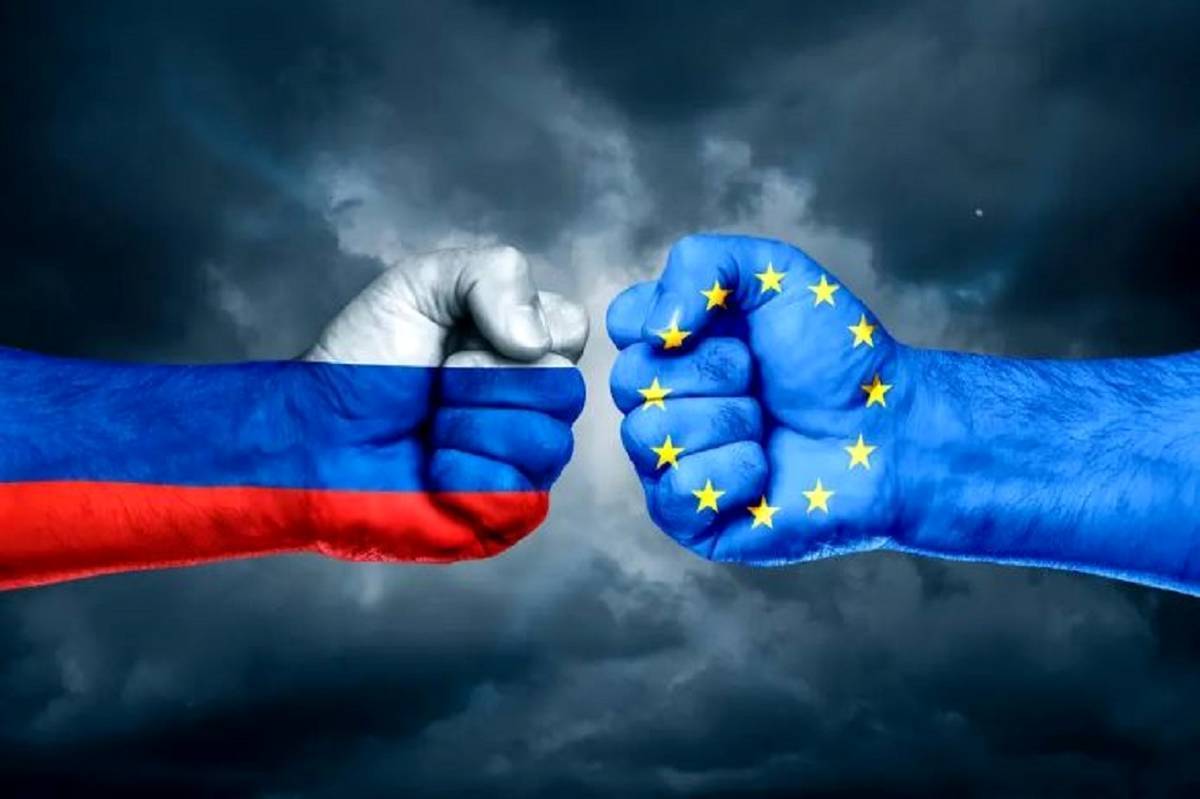
What makes the situation paradoxical is that Europe, led by Germany, France and the United Kingdom, is not militarily weak on paper. Its defense budgets, advanced equipment and stockpiles exceed those of Russia. Yet Europe remains deeply afraid of direct confrontation with Moscow. The reason lies not in numbers, but in politics, perception and internal contradictions.
A unified threat perception simply does not exist in Europe. Even today, European governments cannot agree on what exactly Russia represents. While they may label Moscow a strategic threat in theory, their statements and policies reveal deep internal divisions. Eastern European states that rely more heavily on Russian energy do not view Russia as an existential danger. Their argument is simple: if Europe and NATO stop trying to choke Russia geopolitically, Russia will not be a threat. This view once shaped Angela Merkel’s policy of integrating Russia economically into Europe, a strategy that managed to work for nearly a decade.
This fragmented understanding of the “Russian threat” undermines Europe’s unity. It directly affects decision-making on how to support Ukraine, resulting in slow, hesitant, and inconsistent aid. Europe’s disunity is itself one of its biggest vulnerabilities.
The second issue is the enormous social and political cost of war. European states have spent decades building welfare-oriented systems centered on social services. With the outbreak of the Ukraine war and Europe’s financial and military support for Kyiv, welfare indicators have declined. Multiple factors are at play, from supply chain disruption to inflation. But European governments have also diverted welfare funds toward the war effort, and citizens are feeling it. This erosion of living standards is fueling widespread public dissatisfaction. Far-right movements have gained strength across the continent, many of them openly opposed to the Russia–Ukraine war.
A direct European war with Russia could trigger severe internal instability, even political collapse in some states. This looming social backlash makes European leaders hesitant and uncertain.
A third factor is Europe’s long history of “Russophobia.” For decades, political and media narratives inflated Russia into a formidable existential threat. Europeans have internalized these narratives so deeply that their own militaries doubt their ability to confront Russia, despite their superior resources.
On top of that, Europe lacks unified command and suffers from bureaucratic paralysis. Divergent national interests, slow decision-making structures, and the absence of a central military authority severely weaken the continent’s ability to act collectively. Europe may see itself as a global military power, but its decision-making machinery tells a different story.
Ultimately, Europe cannot seriously contemplate a direct conflict with Russia. The costs are overwhelming: political fragmentation, social instability, logistical exhaustion, ammunition shortages and the near depletion of weapons stockpiles in countries like Germany and France due to support for Ukraine.
Europe today relies more on projecting an image of military strength than actually exercising it. Its strategy is to inflate the perceived cost of conflict for others, hoping deterrence alone will keep wars away from its borders. Whether this strategy will succeed remains uncertain. What is clear, however, is that Europe is not as strong as it claims and does not possess the resolve to fight for the values it constantly advertises.
امین مهدوی
https://www.politico.eu/article/europe-thinks-the-unthinkable-retaliating-against-russia-nato-cyber-hybrid/
https://brusselssignal.eu/2025/11/europes-paper-tiger-mightier-than-russia-yet-still-afraid-of-it/

Comment
Post a comment for this article