723 Views
The New Sanctuary: How ISIS-K’s Shift into Pakistan Is Rewriting the Region’s Security Map
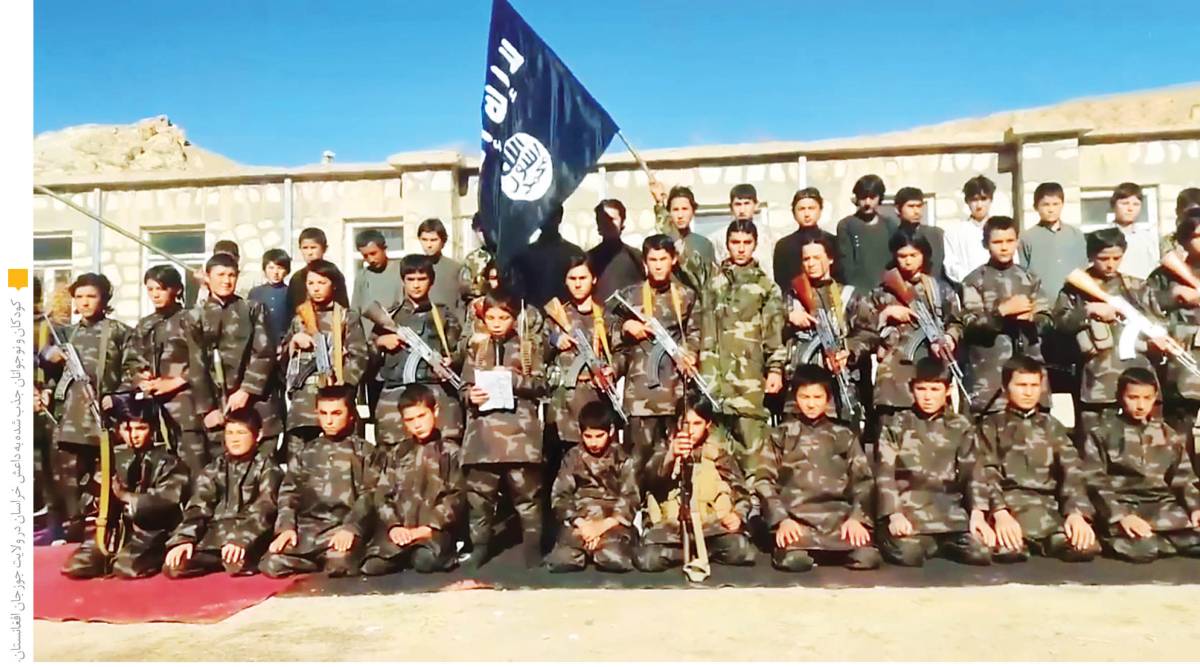
In 2015, the Islamic State established its Khorasan Province (ISIS-K) as an extension of its global network, embedding itself in Afghanistan’s mountainous eastern regions, particularly Nangarhar and neighboring Kunar. These territories soon became the group’s primary strongholds. Over the past years, ISIS-K has carried out numerous terrorist attacks not only inside Afghanistan but abroad, repeatedly clashing with the Taliban as both sides competed for dominance.
Before the Taliban’s return to power, Afghanistan served as ISIS-K’s central base of operations. But after 2021, the Taliban began viewing ISIS-K as a major threat and launched extensive counterterrorism campaigns. At the height of these pressures, ISIS-K leadership, seeking survival and new sanctuaries, began relocating fighters, command centers, and operational hubs into Pakistan, with Balochistan emerging as the main destination.
Despite denials from certain Western media outlets, the sharp decline in ISIS-K attacks inside Afghanistan in recent months strongly signals this shift. Even Western reporting has acknowledged the near-zero rate of ISIS-K activity inside Afghanistan. Earlier, the Commonwealth of Independent States’ Anti-Terrorism Center (ATC) had already warned that ISIS was transferring fighters from Syria to Pakistan, with significant evidence supporting this claim.
Additional proof of ISIS-K’s relocation includes its growing cooperation with Pakistani extremist groups, expanding propaganda operations using their networks, and a notable rise in coordinated attacks inside Pakistan.
Several analysts argue that Pakistan, seeking leverage against the Taliban, may have covertly tolerated or facilitated ISIS-K’s presence on its soil, viewing it as a counterweight in its fraught relationship with Kabul.
Pakistan has struggled with terrorism for decades and possesses significant counterterrorism capabilities. Still, a recent wave of targeted killings of ISIS-K leaders inside Pakistan reflects a concerning trend. The assassinations, though frequent, indicate a lack of decisive political will to confront the continued spread of ISIS-K.
Recent incidents include the killing of “Burhan,” known as “Zaid,” a senior commander in Patek near Akhtarabad; the assassination of “Mullah Qari,” ISIS-K’s operations chief, near Lahore; the death of “Abu Harith,” a recruitment head in Khyber Pakhtunkhwa; and the killing of “Qari Abdul Rahman,” a network coordinator in Karachi.
In early 2025, a significant clash further exposed ISIS-K’s presence in Pakistan. A Pakistani anti-government militia attacked an ISIS-K base in Mastung, Balochistan, reportedly killing 30 ISIS fighters, including several foreign nationals. ISIS-K responded by formally declaring war on the militia, highlighting the depth of its operational entrenchment in Pakistan.
Experts note that despite leadership losses, ISIS-K is aggressively expanding its influence inside Pakistan through adaptive strategies and deceptive recruitment campaigns. Sympathizers have accelerated recruitment using blended propaganda, revealing a sophisticated organizational structure embedded within Pakistani territory.
Meanwhile, Taliban officials continue to insist that ISIS-K has been almost entirely eliminated from Afghanistan. Taliban spokesperson Zabihullah Mujahid recently asserted that Afghanistan had been cleared of ISIS-K, with only “one to two percent” of fighters possibly remaining in remote mountain areas. Interior Ministry spokesman Abdul Mateen Qani went further, claiming ISIS no longer exists in Afghanistan at all.
Yet, despite these claims and the clear evidence of ISIS-K’s operations in Pakistan, a fierce “war of narratives” is underway. Pakistan is attempting to shape international perception through media channels and its access to intelligence platforms such as the UN Security Council’s committees. Limited access to Afghanistan by regional powers gives Pakistan additional leverage to skew narratives and maintain focus on Afghanistan as the supposed core of ISIS-K operations.
The reality, however, points to a relocation-driven shift — not the end of ISIS-K but the displacement of its operational centers under heavy Taliban pressure. Until a lasting settlement is reached between Islamabad and Kabul, this movement is likely to continue.
Analysts warn that Pakistan’s quiet support for anti-Taliban factions has created fertile ground for ISIS-K’s expansion. If the trend continues, the group’s increasing organization could widen the scope of regional violence, destabilize Afghanistan further, and ultimately pose a growing security threat to Pakistan itself.
Translated by Ashraf Hemmati from the original Persian article written by Navid Daneshvar
https://fa.alalam.ir/news/5775748/از-داعش-خراسان-چه-می-دانید؟
https://jahanesanat.ir/?p=538045
https://ria.ru/20171005/1506224141.html
https://www.pravda.ru/world/1969042-igil_pakistan/
https://watan24.com/پردهبرداری-از-شبکههای-داعش-در-پاکس/
https://avapress.com/fa/note/312866/استراتژی-جلب-جذب-شاخه-خراسان-داعش-نقش-جنگجویان-خارجی
https://af.irna.ir/news/85754517/

Comment
Post a comment for this article