The letter written by Liam Purcell, chief executive of Church Action on Poverty, reads less like a moral appeal and more like an indictment of Britain’s political establishment. His central claim is stark: over the past 15 years, the lives of millions have been knowingly made worse by the state. This framing strips poverty of any illusion of inevitability and recasts it as a manufactured outcome of policy.
Purcell argues that prolonged austerity, combined with the rise of extreme individualism, has fundamentally reshaped how poverty is understood. Structural injustice has been reframed as personal failure. As a result, poverty no longer provokes outrage; it has become an accepted feature of national life. This shift is more corrosive than material deprivation itself, because it erodes the moral reflex to resist inequality.
A central theme of the letter is the growing distance between decision‑makers and lived reality. Britain’s social policies, Purcell notes, are designed by people who have never experienced life on a low income, housing insecurity, or dependence on welfare systems. This disconnect produces policies that are, at best, superficial and, at worst, punitive and degrading. Reform becomes symbolic rather than transformative.
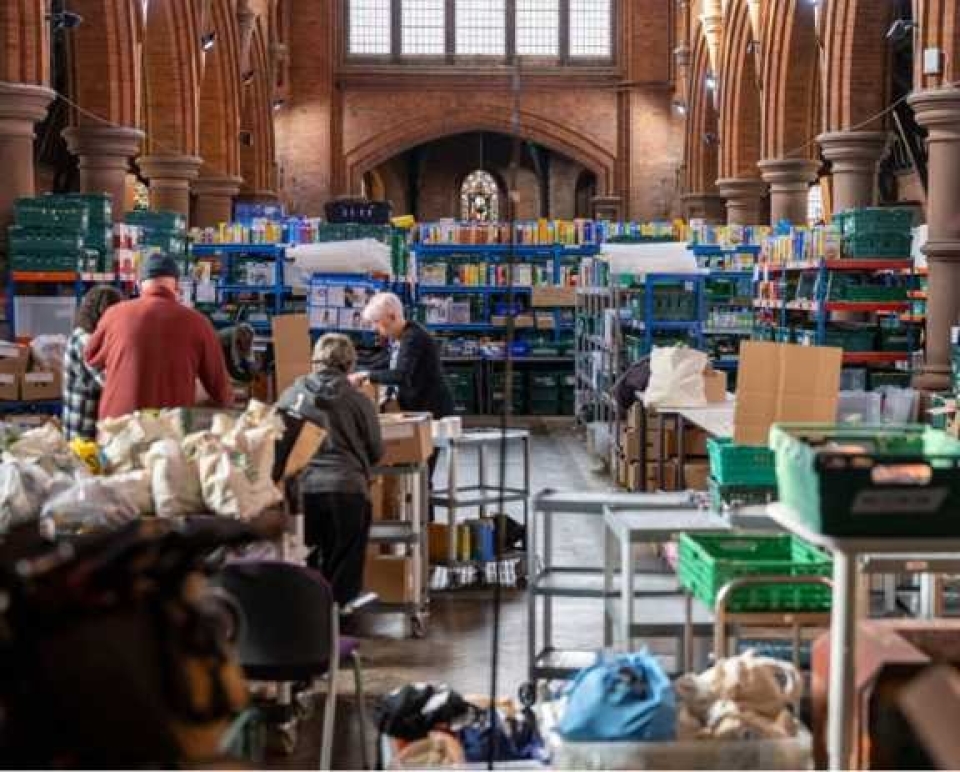
The erosion of local community spaces and informal support networks has further intensified the damage. As these buffers disappear, the state offers only fragmented, minimal interventions — enough to manage visibility, not enough to resolve the crisis. Small‑scale community initiatives demonstrate that better outcomes are possible, yet governments consistently refuse to scale them as long as conclusion is bleak but clear. As long as poverty is treated as politically acceptable, and as long as those most affected remain excluded from decision‑making, its normalisation will continue. This is not a policy accident. It is a conscious choice — and one that carries long‑term social consequences Britain has yet to fully confront.