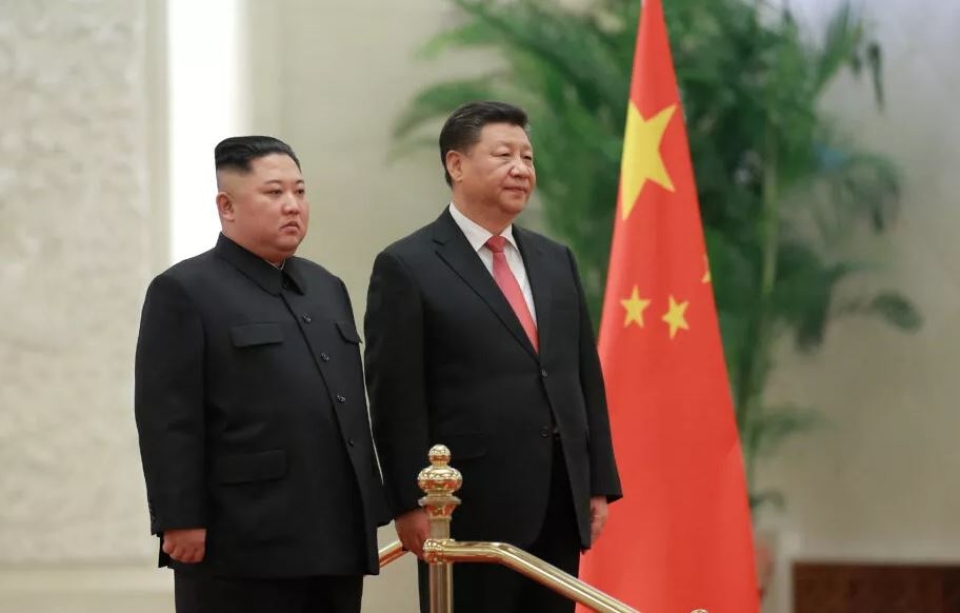
China’s relationship with North Korea has long been extensive, with Beijing consistently providing significant support to Pyongyang in order to secure a reliable ally on the Korean Peninsula. China is widely regarded as the overarching policymaker in this relationship and has had the ability to shape North Korea’s strategic direction.
Following the rise of Kim Jong-un, North Korea’s current leader, a shift occurred in the country’s broader policies, most notably in the military and economic sectors. Reforms were introduced, reducing—though not eliminating—North Korea’s reliance on foreign partners for meeting domestic needs. This article explores China’s evolving role toward North Korea and the regional consequences of this transformation.
China’s Changing Role in the North Korea File
In the past, Beijing’s approach to North Korea was primarily one of control, aimed at moderating Pyongyang’s risky behavior. Given China’s crucial role as a supplier, North Korea’s leaders generally followed Beijing’s lead. However, in recent years, as China’s rivalry with the United States has intensified, Beijing’s controlling stance toward North Korea has visibly weakened. This new strategy appears deliberate: China has refrained from restricting Pyongyang’s provocative actions, instead allowing North Korea to exert pressure on the U.S. and its allies in East Asia.
Russia’s Growing Influence on North Korea Contrary to the assumptions of some international relations experts, Russia’s closer engagement with North Korea has not distanced China from Pyongyang. On the contrary, Beijing, in competition with Moscow, is working to strengthen its ties with North Korea. For Kim Jong-un’s government, which remains diplomatically isolated, this is a win-win scenario. The simultaneous deepening of both China’s and Russia’s relations with North Korea could become a tool for Pyongyang to boost its power and break out of isolation in the future.
China’s Dual Perspective on North Korea
Beijing views North Korea through two lenses. The first is threat-based: should the North Korean issue spiral into crisis, China could face instability, refugee flows, and an arms race on the peninsula—developments that would obstruct China’s growth, given its reliance on regional stability. The second is strategic: North Korea is considered an asset for Beijing, one that can divert U.S. attention on the peninsula and reduce Washington’s focus on Taiwan. For China, which is preparing for the eventual annexation of Taiwan, this diversion is of critical strategic value. Understanding these two perspectives together helps explain China’s policy toward North Korea.
North Korea as a Lever on the Taiwan Question
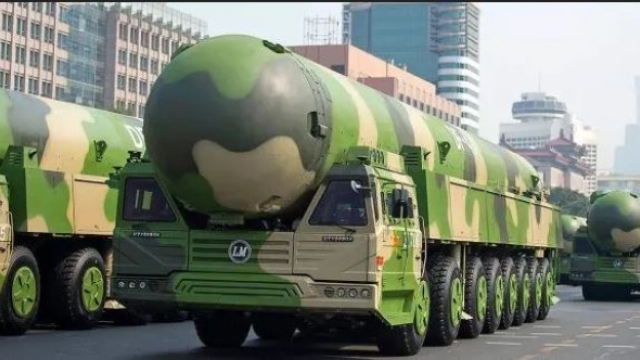
China uses North Korea’s nuclear and missile programs as leverage against the United States, conditioning cooperation on Washington’s adherence to the One-China policy. This geopolitical tool allows Beijing to secure bargaining chips in future negotiations over Taiwan. The U.S. is well aware that should Pyongyang escalate hostilities against South Korea, the Korean Peninsula could be thrown into deep crisis, destabilizing East Asia as a whole. For this reason, both Beijing and Washington maintain an ambiguous and uneasy policy—deliberately avoiding escalation while keeping room for future compromise on their disputes.
Conclusion
In sum, China’s policy toward North Korea has undergone significant transformation. Pyongyang is no longer treated merely as a tool but rather as a strategic investment that Beijing is unwilling to risk. With the intensifying U.S.-China rivalry, North Korea is positioned to extract greater benefits from its relations with both China and Russia—an advantage for Kim Jong-un’s government as it struggles with persistent domestic challenges.
Translated by Ashraf Hemmati from the original Persian article written by Amirali Yeganeh
-
https://www.cfr.org/backgrounder/china-north-korea-relationship -
https://www.foreignaffairs.com/china/chinas-north-korea-problem